
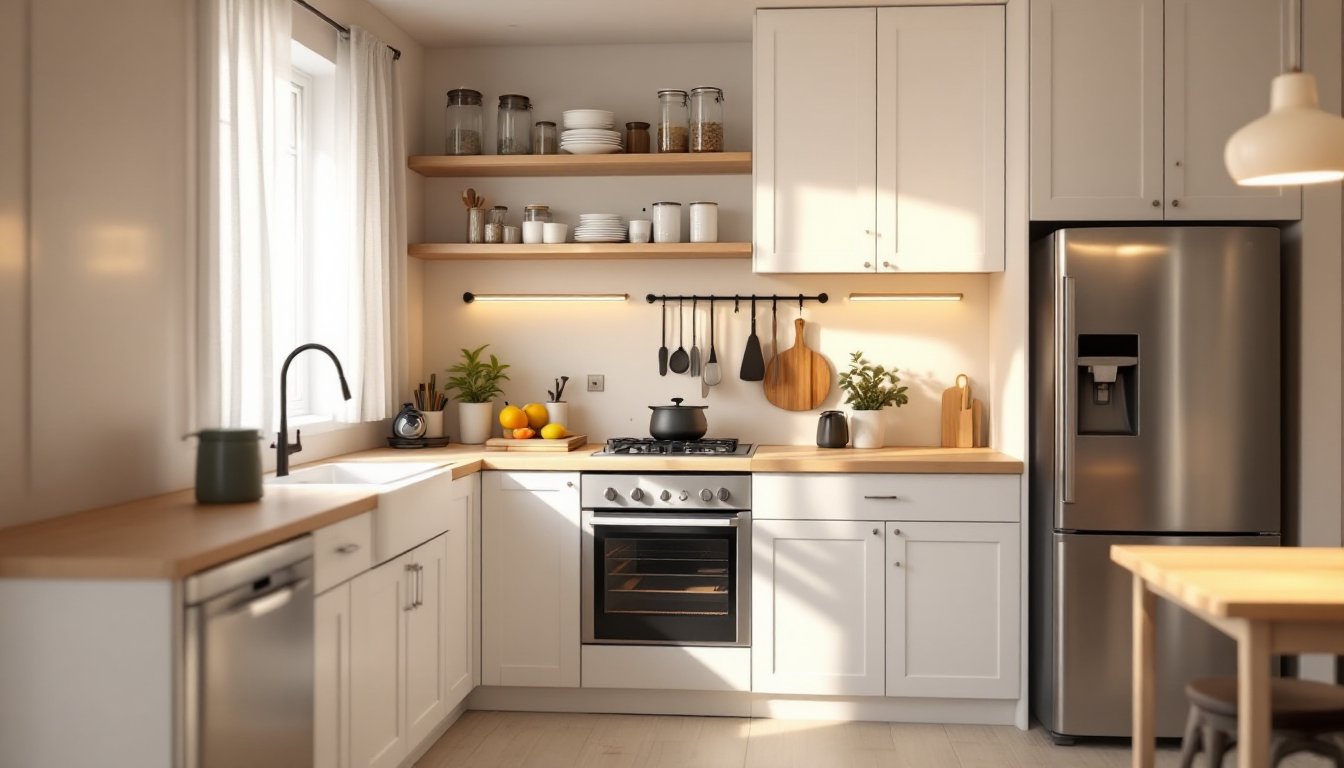
A small kitchen doesn’t mean you have to sacrifice function or style. In fact, tight quarters often force smarter design choices that make cooking faster and more enjoyable. Whether you’re working with a galley layout, a corner nook, or an open-concept space that doubles as your dining area, the right strategies can transform your kitchen into an efficient, attractive hub. This guide walks through practical small kitchen design ideas, from vertical storage and lighting tricks to compact appliances and layout optimization, that work in real homes, not just magazines.
Table of Contents
ToggleKey Takeaways
- Optimize vertical storage with floor-to-ceiling cabinets, open shelving, and wall-mounted racks to maximize small kitchen design without expanding footprint.
- Light colors, strategic layered lighting, and natural light through windows make small kitchens feel larger and more inviting while improving functionality.
- Select compact, multi-functional appliances like convection ranges and compact dishwashers that save space and eliminate the need for duplicate units.
- Maintain an efficient work triangle by keeping sink, stove, and refrigerator within 4-9 feet to streamline cooking workflows in tight layouts.
- Incorporate pull-out shelves, sliding cabinet doors, and rolling carts to turn wasted deep storage and cramped spaces into accessible, organized work areas.
- Start with one or two strategic improvements like better lighting or pull-out organizers and build from there to create a kitchen that fits your cooking style.
Optimize Vertical Storage and Wall Space
When floor space is limited, look up. Vertical storage is your best friend in a small kitchen because it pulls storage off the counters and adds functionality without expanding the footprint.
Floor-to-ceiling cabinets work better than standard height ones in tight layouts. If your current setup stops at 84 inches, adding shelving or a cabinet run to 96 inches (or even to a soffit) captures dead space that usually collects dust. Open shelving above a sink or prep area keeps frequently used items, bowls, glasses, everyday dishes, within arm’s reach while giving the kitchen a more spacious feel.
Wall-mounted racks, magnetic strips, and pegboards keep knives, utensils, and small tools visible and accessible without eating into cabinet storage. A pegboard above your stove or prep zone costs under $50 and takes maybe an hour to install with basic tools. Glass canisters on open shelving serve double duty: they store dry goods and let you see at a glance when you’re running low on flour or pasta.
Don’t overlook corner storage. Corner cabinets often waste space because items disappear into the dark. A pull-out corner organizer or a lazy Susan turntable makes those awkward angles productive. Some homeowners install angled glass shelves in corner cabinets to create display space for cookbooks or serving pieces while keeping everything accessible. If you’re willing to swap out an existing cabinet, a corner pullout designed specifically for that corner can gain you nearly as much usable storage as a standard 24-inch base cabinet.
Choose Light Colors and Strategic Lighting
Color and light work together to make small spaces feel bigger and more inviting. Light, neutral tones, soft whites, pale grays, warm beiges, reflect light and create visual openness. This doesn’t mean sterile: warm whites (around 2700K color temperature) feel cozier than harsh cool tones.
When picking paint colors for kitchens, matte or satin finishes work better than glossy in small spaces because they minimize visual clutter without the reflective ping of semi-gloss. If you want color, a single accent wall works: avoid painting all four walls in a dark shade, it closes in the space. White or pale cabinets feel more open than dark wood, though you can add warmth with natural wood elements like open shelves or a wooden range hood.
Lighting is non-negotiable in a small kitchen. Overhead recessed lights or a low-profile flush-mount fixture provide ambient light without eating into headroom. Layer in task lighting under cabinets with LED strips (about $30–60 installed) to brighten your prep area and reduce shadows that make the space feel cramped. A small pendant or two over an island or bar adds style and focused light where you work. Pendant lights also draw the eye upward, making the kitchen feel taller.
Window treatments matter too. Sheer curtains or no curtains at all (if privacy isn’t an issue) maximize natural light, which is the best space-expander. If you need privacy, consider roman shades that pull up completely during the day.
Select Compact, Multi-Functional Appliances
Oversized appliances are deal-breakers in small kitchens. A standard 30-inch range is fine, but a 36-inch or larger model will overwhelm the space and steal counter room. If you have room for only one oven, choose a convection range because it cooks more efficiently, saving time and energy.
Look for appliances that pull double duty. A microwave-convection combo unit eliminates the need for a separate microwave and frees up counter or cabinet space. Compact dishwashers (18 inches wide vs. the standard 24 inches) clean fewer dishes per load but cost less and fit under narrow counters or in tight openings. If counter space is precious, a drawer-style dishwasher that sits under the counter keeps your work surface clear.
Small refrigerators (18–21 cubic feet instead of 25+) look proportional and don’t dominate the room. Slim-profile ovens or toaster oven-range combos work in super-tight kitchens. A separate beverage cooler or wine fridge under the counter can replace the space a full-size fridge once took.
Before buying, measure twice. Appliance dimensions are given in inches, and installation clearance (for doors to open fully, ventilation to breathe) can eat up another 3–6 inches around the unit. A smart kitchens approach also means choosing induction cooktops or convection ovens that heat faster and more evenly, reducing cooking time and the thermal load your small space has to handle.
Use Efficient Layouts and Smart Counter Solutions
Maximize Your Work Triangle
The classic kitchen work triangle, sink, stove, refrigerator, should keep distances short in a small kitchen. Ideally, each side of the triangle is 4–9 feet: in a small galley kitchen, they might be closer. A cramped triangle is still better than a spread-out one. If your layout forces a longer distance, position your most-used items (a second cutting board, extra storage) midway to break up the distance.
A single-wall or galley layout is common in small homes. In a galley, opposite counters create a natural workflow but leave little room for two people. In a single-wall kitchen, everything lines up along one side, which feels inefficient but can work if you organize strategically. An island or a small cart can act as a second prep surface and seating area without blocking traffic.
Incorporate Pull-Out and Sliding Storage
Pull-out shelves and sliding organizers make the back of deep cabinets usable instead of a dumping ground. A set of three pull-out drawer organizers for a 24-inch base cabinet costs $30–50 and transforms wasted depth into accessible storage. Spice racks on pull-out slides, narrow shelves for canned goods, and vertical dividers for baking sheets all keep items visible and within reach.
Sliding cabinet doors instead of swing-out doors save space by eliminating the swing radius. If your kitchen is tight enough that a cabinet door hits you when opened, a sliding door or a pocket door option solves it. Corner cabinets with lazy Susan turntables let you spin items forward rather than reaching into darkness.
A small kitchen from Apartment Therapy might feature rolling carts under the counter, multipurpose butcher block islands on wheels, or fold-out drop leaves that expand counter space during cooking and stow away after. Counter space is gold in a small kitchen: every inch counts. Appliances on the counter should earn their place: a stand mixer, a coffee maker, and a toaster are frequent users, so they stay out. A bread maker or rice cooker that gets used monthly should live in a cabinet and come out when needed.
Conclusion
Small kitchen design is about working smart, not hard. By stacking storage vertically, using light colors and layered lighting, choosing right-sized appliances, and optimizing your layout, you’ll create a kitchen that’s both functional and pleasant to work in. The best small kitchen is the one that fits your cooking style and home. Start with one or two changes, better lighting or a pull-out organizer, and build from there. Your future self, standing at the sink without elbow-bumping a wall, will thank you.