
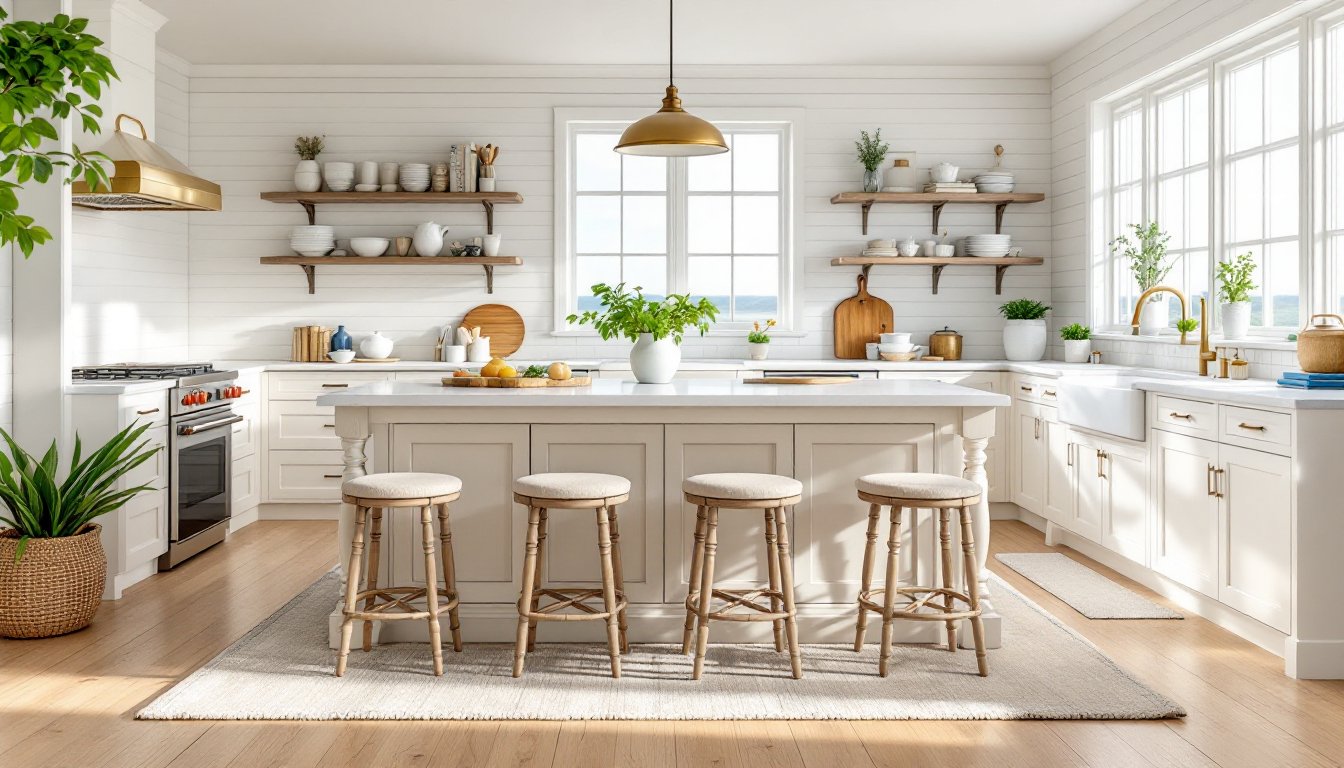
A Nantucket island kitchen brings the unhurried charm of New England coastal living straight into your home. Think whitewashed shiplap, soft blues and creams, open shelving, and weathered wood, all working together to create a space that feels both refined and lived-in. This style has staying power because it’s not about trend-chasing: it’s rooted in how actual islanders lived and worked, prioritizing natural light, practical storage, and honest materials. Whether you’re remodeling an entire kitchen or updating your existing island, understanding the core elements of Nantucket design will help you make decisions that feel cohesive and authentic. Let’s walk through how to bring this coastal aesthetic into your space without it feeling like a resort lobby.
Table of Contents
ToggleKey Takeaways
- A Nantucket island kitchen combines whitewashed shiplap, soft blues, creams, and weathered wood to create refined yet lived-in coastal design rooted in authentic islander living practices.
- The Nantucket color palette is intentionally restrained—whites, creams, soft grays, and pale blues—because these colors naturally complement coastal light and age gracefully with salt spray and weathering.
- Island kitchen storage in Nantucket style prioritizes visible, honest organization through open shelving, glass-front cabinets, and lower cabinetry zoning, making functionality and beauty work together seamlessly.
- Proper island sizing (typically 24 inches deep and 48–72 inches long) with 42–48 inches of clearance on all sides ensures your Nantucket island kitchen functions for both food prep and comfortable gathering.
- Weathered wood finishes—achieved through whitewashing, hand-distressing, or reclaimed materials—are central to Nantucket design and should look naturally aged rather than factory-fresh.
- Minimal, intentional decor on open shelves and countertops keeps the space uncluttered while clean pendant lights and bracket sconces maintain the timeless, unfussy aesthetic that defines island kitchen style.
What Defines Nantucket Island Kitchen Design
Nantucket style distills down to a few architectural and design principles that originated on the actual island. The look prioritizes functional simplicity: cabinetry without ornate moldings, open floor plans that flow naturally, and an emphasis on natural light and airy proportions. You’ll see clean lines rather than fussy details, think of it as practical elegance.
Harking back to the island’s whaling and maritime heritage, the design celebrates natural materials: reclaimed or distressed wood, unfinished or whitewashed finishes, and textured surfaces that show their age. Hardware tends toward simple bronze, nickel, or wrought iron, nothing shiny or contemporary.
Storage is honest and visible. Open shelving, glass-front cabinets, and exposed beams avoid hiding clutter: instead, the design culture embraces it as part of the home’s character. A Nantucket kitchen should feel like a place where real cooking and living happen, not a museum piece. Functionality and beauty aren’t opposing forces here, they live together.
The Coastal Color Palette and Materials
The Nantucket palette is inherently restrained: whites, creams, soft grays, and pale blues dominate. These colors aren’t arbitrary, they reflect the natural light of the coast and the practical reality that lighter colors hide salt spray and weathering less visibly.
Walls typically feature white or off-white shiplap, beadboard, or simple flat drywall with bright, high-quality paint. Cabinetry leans heavily toward white or cream painted wood, sometimes with a chalky or matte finish rather than glossy. Countertops favor natural stone, granite, soapstone, or marble, or simple butcher block for warmth.
Backsplashes often use white subway tile, though reclaimed brick or shiplap works too. Flooring gravitates toward wide-plank hardwood (often white or light gray), reclaimed wood for character, or large-format stone tiles. Avoid anything too polished or pristine: the goal is honest materials that age gracefully.
Research from sources like Remodelista shows that sourcing authentic materials, even if reproducing them, makes a tangible difference in how the space feels. Consider leaving stone unsealed, allowing wood to develop a patina, or choosing hardware with genuine verdigris rather than synthetic finishes.
Wood Finishes and Weathered Textures
Weathered wood is central to Nantucket design. Rather than staining wood to a uniform color, embrace distressed finishes that mimic age and salt-air wear. Whitewashing or liming wood (applying a thin, semi-transparent white stain) is the classic approach. This allows the wood grain to show through while adding that coastal, sun-bleached quality.
If you’re working with new wood and want the weathered look, several approaches work: hand-distressing with sandpaper and tools to create dents and worn edges, applying a whitewash stain and then selectively sanding high points, or using reclaimed wood salvaged from barns or old boats. Real reclaimed wood costs more but delivers authenticity, no fake patina needed.
For cabinet interiors and open shelving, consider leaving wood natural or applying a light satin polyurethane to protect it from kitchen moisture without adding shine. The goal is to look like it’s been in a seaside home for fifty years, not like it came from a factory last week.
Essential Features of an Island Kitchen Nantucket
A Nantucket-style kitchen island isn’t just a countertop with stools. It’s a functional hub that anchors the room and reflects the design’s core values.
Cabinet base and structure should feel substantial and well-built, often resembling a freestanding furniture piece rather than a built-in. White or cream painted wood is standard. Shaker-style or simple recessed-panel doors work beautifully: avoid ornate raised panels or contemporary slab doors. If structural supports are visible (like turned legs or open shelving bases), they add character and feel less kitchen-appliance-like.
Countertop materials on the island typically match the main kitchen: butcher block, marble, or granite, sometimes with a simple bullnose or edge detail. Seating should accommodate three to four people comfortably, which usually means 36 to 42 inches of linear space per seat. Allow 15 inches of clearance between the island edge and perimeter cabinetry so you’re not cramped.
Electrical and plumbing require planning. A prep sink in the island is luxurious and practical: gas cooktops or electrics on islands must vent properly. Plan your utilities during design, running electric and plumbing under the island after the fact is messy and expensive. If the island doesn’t have a cooktop or sink, you still need accessible outlets: code typically requires one outlet per 4 linear feet of countertop.
The island should have open shelving or lower cabinetry for dish storage, cookbooks, or pantry overflow. Glass-front doors keep visual interest while letting you see contents. A hanging pot rack above the island adds functionality and fills vertical space without cluttering surfaces.
Choosing and Styling Your Kitchen Island
Sizing your island correctly is critical. Too small and it feels like an afterthought: too large and it dominates the room and blocks traffic flow. Aim for at least 24 inches of depth (so overhang allows comfortable seating), and length depends on your kitchen, typically 48 to 72 inches for a standard residential island. Measure your clearances: you need a minimum of 42 to 48 inches of walking space on all sides for practical use.
Layout matters more than you might think. Position the island so it doesn’t block the primary path from entry to the main work zone. If your kitchen is galley-style, keep the island away from major pathways. L-shaped or U-shaped kitchens have more flexibility for island placement.
Material sourcing depends on your budget and timeline. Stock cabinetry (from big-box stores) is affordable but often feels flimsy: semi-custom runs 6-10 weeks and offers better build quality for moderate cost. Full custom cabinetry from local builders or shops can take 12+ weeks and costs significantly more, but the craftsmanship and customization options justify the investment if you’re doing a major remodel.
Layout decisions like coastal kitchen designs often show that seating on one long side (rather than wrapping around) keeps the island functional for food prep while providing a natural gathering spot.
Designing Functional Storage and Seating
Storage in the island should be thoughtfully zoned. Lower cabinets work best for heavy items (pots, small appliances, bulk dry goods). Open shelving or glass-front middle sections display items you use regularly or aesthetically pleasing cookware. Upper shelving, if the island is tall enough, can hold cookbooks, decorative bowls, or glassware.
Seating comfort requires proper barstool height. Standard counter seating (30-36 inches high) uses 24-26 inch stools: bar-height counters (36-42 inches) need 30-32 inch stools. Leave 10-15 inches between stools for comfort. Upholstered seats add warmth: natural wood or woven rattan seats fit the Nantucket aesthetic better than chrome-and-vinyl contemporary styles.
Incorporate a footrest or kick rail behind the seating area for comfort and to protect cabinet toe-kick damage. This is a small detail that makes sitting for 15 minutes feel less like perching on a stool.
Consider the visual weight of your seating. Turning wood legs with simple cross-braces look more Nantucket than pedestal bases or modern cantilever designs. If you can’t source stools that match your aesthetic, upholstering them in a natural linen or coastal-toned fabric bridges the gap.
Lighting and Decor for Nantucket Kitchens
Lighting shapes how the whole space feels. Pendant lights over the island should have clean, unfussy designs, think shaker-inspired metal shades, milk glass globes, or fabric shades in white or natural linen. Avoid ornate chandeliers or trendy designer fixtures: they fight against the timeless quality you’re after.
Bracket-style brass or bronze sconces over the sink or open shelving add ambient warmth without requiring ceiling fixtures. Task lighting under upper cabinets (LED strip lights or small puck lights) illuminates the countertop without being visible. Dimmer switches throughout let you adjust the mood, bright for cooking, softer for morning coffee.
Decor in a Nantucket kitchen is minimal but intentional. Open shelves should show quality over quantity. Mix everyday dishes with a few decorative bowls, cookbooks with botanical prints, and a small potted herb plant or two. Avoid overcrowding or overstaging: it should look like things belong there, not like you’ve dressed the shelves for a photo shoot.
A simple linen runner or natural fiber rug defines the kitchen zone without blocking traffic. Textiles in whites, creams, and soft blues tie the palette together. Vintage or reclaimed architectural elements, driftwood, old ship hardware, a salvaged beam as open shelving, add character without looking kitschy. And for design ideas that feel grounded and practical, resources like The Kitchn offer kitchen design advice that balances inspiration with real-world constraints.
Keep countertop styling spare. A wooden cutting board, a ceramic utensil holder in white or cream, and perhaps a small bowl for fruit or fresh herbs. The goal is to make everything on display useful and beautiful, not precious or untouchable. A Nantucket kitchen should still feel like a place where you actually cook.